Current
Events
Upcoming events
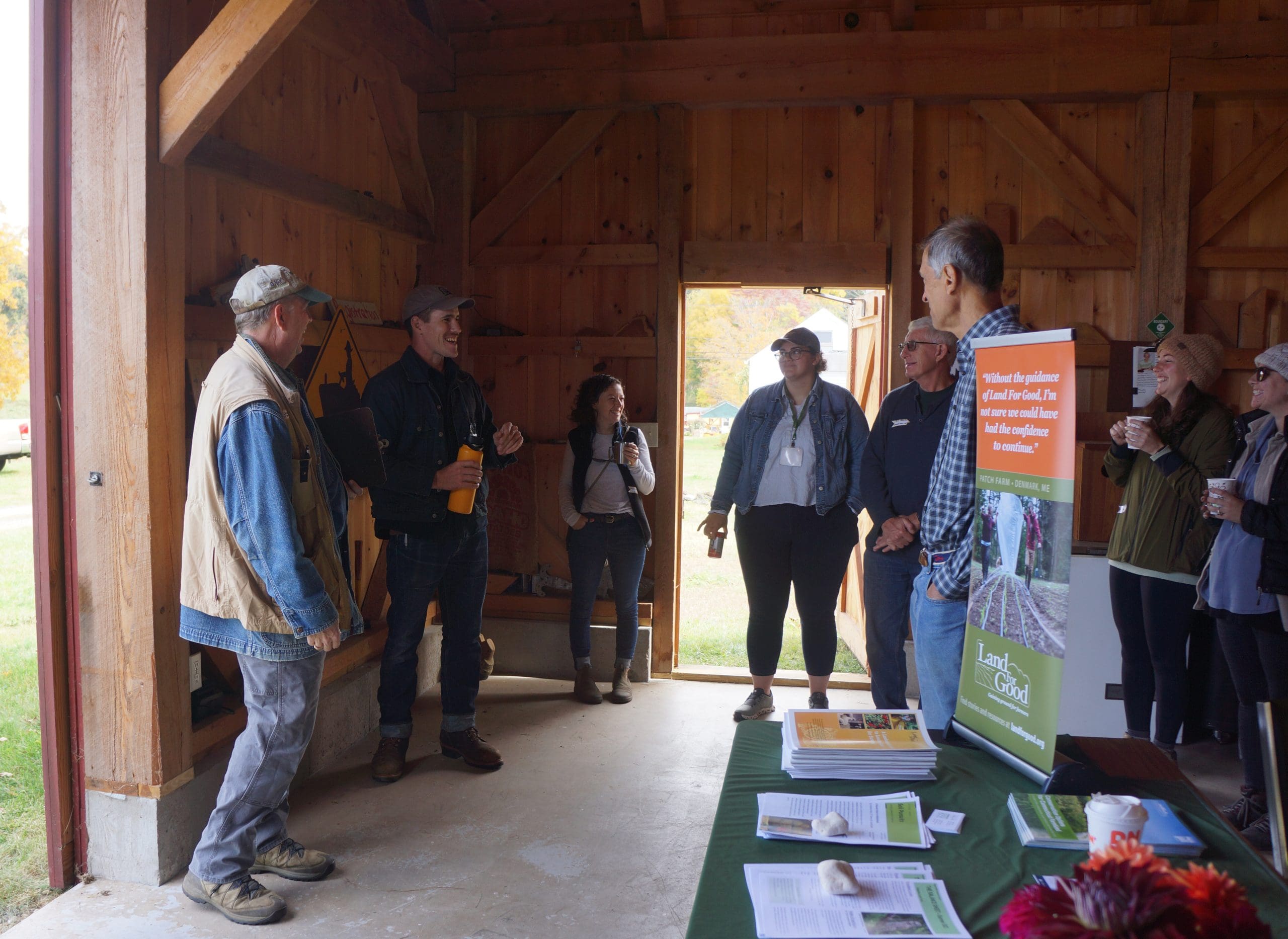
Our staff offer presentations and host workshops, trainings, and mixers across the region with local and regional partners, as well as nationally.
National Farm Viability Conference
“Resilience in Practice: Solutions in Challenging Times”
September 22 – 24, 2026
Hotel Albuquerque, Albuquerque, NM
Agenda & Registration
The National Farm Viability Conference is the foremost gathering for agricultural professionals from across the nation to engage in peer-to-peer learning and networking, with a focus on effective approaches in farm viability programming, building resilient local food systems, and supporting the profitability and growth of farms and food businesses from start-ups to multigenerational businesses. Check out these sessions led by Land For Good:
- Farmlinking Roundtable Discussion. This session will be a forum for Farmlinking organizations to discuss and learn from one another about emerging topics, challenges, opportunities, solutions and opportunities for collaboration. In particular, we’d like to explore with attendees how they are attracting landowners to their site and confirming their fit for future farmers. Additional discussion topics may include: starting/managing a FarmLink; increasing land access Opportunities; data management and evaluation; website mechanics and management; and supporting diverse farmers through farmlink. Speakers include: Liya Schwartzman, Senior Program Manager, California FarmLink; and Shemariah Blum-Evitts, Executive Director, Land For Good. Session scheduled for September 23rd at 11:00am
- Practical Considerations for Ground Leases. Ground leases have been promoted in the agricultural context for the past 20 years. As a land access tool, they are promised to ensure long-term affordability by severing ownership of the improvements (buildings) from the real estate (land) for the duration of their 99 year term; they are advertised as a means of building farmer equity in their investments to land, which remain owned by the farmer; they are held out as a means of providing greater community control over land stewardship, since the land is generally owned by a land trust or community-based non-profit. Ground leases are a necessary tool in the community land trust model, which has also been promoted widely. Yet, despite the popular knowledge of ground leases as a farmland access solution, they are not a silver bullet. Very few ground lease transactions have occurred, relative to the amount of conservation easements implemented or other real estate transfers. Even fewer ground leases have transferred from the original stewards to subsequent parties, which is a true test of whether the model is durable for multiple generations of farmers. There are few technical assistance professionals who have experience drafting and executing ground lease transactions, and state by state, there are numerous transactional gaps (and unresolved questions) that can create obstacles to a project. Now, revisiting the topic of ground leases many years on, this panel will reflect on the practical considerations of implementing ground leases as a farmland access tool. The panel will review known ground lease transactions, report their successes / challenges, and outline the lessons learned (legal, financial, social, etc). This panel seeks to further develop ground leases as a viable land access tool by offering reflection and constructive criticism. Speakers include: Margaret Christie, Special Projects Director, Community Involved in Sustainable Agriculture (CISA); Margaret Christie is the Special Projects Director at CISA; Jack Hornickel, Staff Attorney, Pace Law School; and Shemariah Blum-Evitts, Executive Director, Land For Good. Session scheduled for September 24th at 8:00am
- Assessing What Matters – How Do We Know Our Programs Are Working? While evaluation is often viewed as a funder requirement, it can also be a valuable tool for learning, improving services, and understanding impact. This highly interactive session invites participants to share how they currently define and measure success in their technical assistance, farm viability, and producer support programs. Through small-group discussions, peer exchange, and real-world scenarios, participants will explore what is being measured, what may be missing, and how factors such as relationships, engagement, timing, and adaptability influence producer outcomes. Rather than focusing on a single evaluation approach, the session creates space for participants to learn from one another, examine different assessment practices, and leave with practical ideas they can apply within their own organizations. Participants will: Discuss why evaluation matters beyond funder reporting; Explore the difference between outputs, outcomes, and impact; Examine how different organizations define and measure success; Identify gaps between what is measured and what producers experience; Leave with at least one new idea or approach to strengthen evaluation in their own work. Speakers include : Rachel Brice, Director, Development & Grants, Land For Good; Liz Gleason, Vermont Farm & Forest Viability Program Director, Vermont Housing and Conservation Board; and Winona Dorris, Accountant and Tax Preparer, CFO for Agriculture. Session scheduled for September 24th at 8:00am
Land Conservation Speed Dating Workshop
November 13, 2026
Berkshire County, MA
Apply to attend
- Land Conservation Speed Dating workshop to connect Berkshire County MA landowners with land management professionals. This “speed dating” format will give each landowner time with each service provider to discuss opportunities and challenges of their property with experienced and knowledgeable folks, including Jae Silverman, our Massachusetts Field Agent. Participants will leave with new contacts, information, and inspiration on how to steward the land they love. *Space is limited. Not all applications will be accepted. Ideal participants should have 20+ acres of land in northern Berkshire County with a mix of field, forest, farm, and/or wetland habitats. Hosted by Berkshire Natural Resources Council in collaboration with local and regional partners.