On a hillside in Springfield, Vermont, the future of a farm is being shaped one decision at a time.
For nearly a century, apple trees have grown at Wellwood Orchards, but over the last forty-five years, Roy Mark has done more than keep the orchard going—he has transformed it.
Now, as Roy and his four daughters navigate what comes next, they are discovering that succession is not a single moment when one generation steps aside. It is a gradual passing of knowledge, responsibility, and trust—the work of giving a farm its best chance to keep growing.
Nearly 250 acres with sweeping views of the Green Mountains, Roy bought the apple orchard in 1981. The orchard was producing fruit primarily for wholesale at the time, with a small retail store.
When the wholesale market collapsed around 1998, sparking the worst economic crisis of the modern apple industry, Roy made a pivotal decision to prune the 6,000 full-sized apple trees to ground level-picking height and embraced pick-your-own. What might have looked like cutting back became a way of growing forward.
Along the way, Roy also added strawberries, blueberries, raspberries, peaches, plums, cherries, and pumpkins. He expanded the small store, where they started making apple cider donuts, and he added a petting zoo, and wagon rides. Each year, Roy likes to add something new. The development rights on the majority of the property were sold to the Upper Valley Land Trust in the 1990s to protect the land for continued agricultural use.
Wellwood Orchards became a destination where generations of families have returned each season. For years, it seemed as though just about every teenager in town had worked at Wellwood. Many of them eventually returned with children of their own. Some still seek out Roy when they visit, eager to tell him a story about a summer they spent picking fruit or a fall afternoon on the wagon ride.
The farm now sells almost all of its crops either through PYO or the farm’s substantial retail stand. A sizable amount of apples are also sold to a local processor that makes apple syrups, jellies, and other value-added products.
In 2012, Roy was 70 years old and still thought of himself as someone who would farm forever. His daughters—Aggie, Linda, Patty and Sherry—were in his will to inherit the farm, but none of them had yet stepped into the day-to-day operation of the farm. There was no concrete plan for the future of the farm, for Roy’s legacy and all that he built.
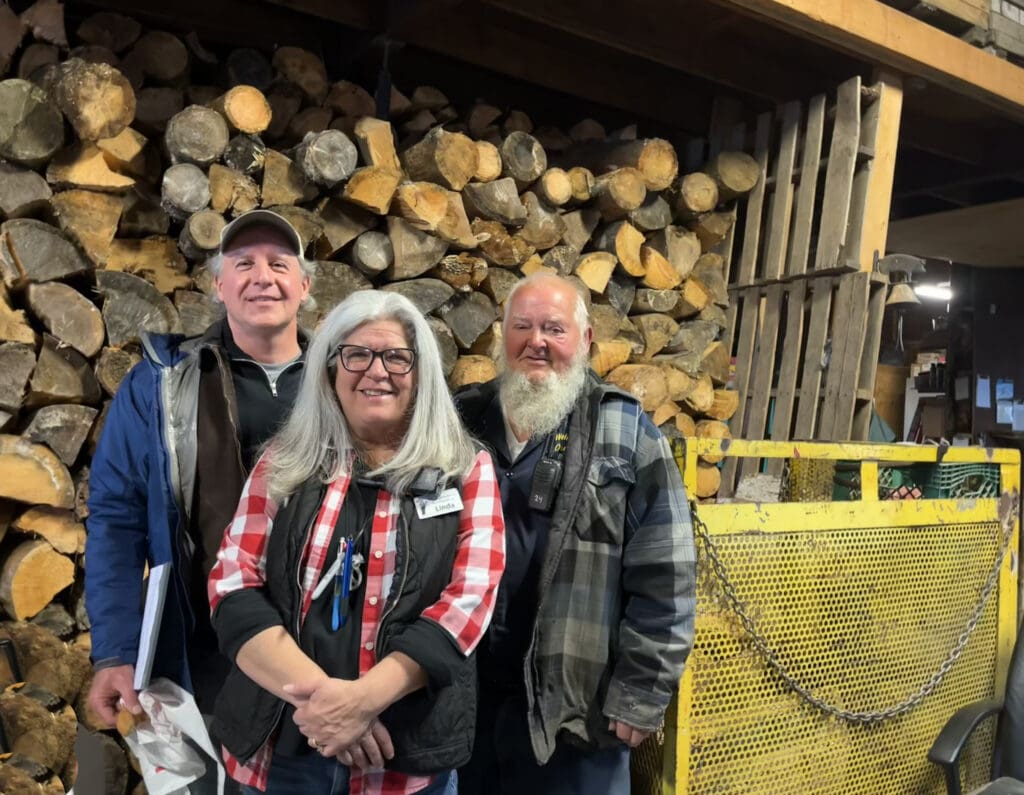
Mike Ghia, Land For Good’s Vermont Field Agent and advisor for UVM Extension Farm Viability Program, connected with Roy through a personal contact while coaching youth soccer. Mike recalls a hesitant start to their conversations, as Roy and his daughter Linda were unsure if they wanted or even needed help. Roy had expected that his daughters would figure things out on their own when he died. But, Mike persisted in pointing out the potential pitfalls of not fleshing out a more thorough plan while Roy was well and alive and could pass along his knowledge and expertise, as well as the benefits to the business and the family that planning would bring. Over the next few years, Mike worked intensively mainly with Roy and Linda, while also including Roy’s other daughters in discussions about the future of the orchard and how to structure things for the future.
“Mike has been wonderful through the whole process. It wouldn’t have happened without him,” recalled Roy.
As a farm succession advisor, Mike helped facilitate conversations with other family members, offered resources and planning assistance, and helped Roy identify and separate the financial, legal, tax and management considerations.
Linda wanted to learn more about the business. The farm was part of her life, but it wasn’t yet her job. She remembers those early conversations. She was working in New Hampshire and changed her work schedule so she could work long days during the week and come back to Vermont on Thursday nights. She gathered deeds and records, learned the financial and marketing side of the business and began understanding the complexity of regulations, structures, labor dynamics, crop production issues, and decisions that come with owning a farm.
“It’s interesting how our relationship changed,” shared Linda. “I learned to be more practical about it, stop being so sensitive, be more like partners. I had to do it for myself, too. I want to learn it.”
Over time, Linda moved home, took over the store when it needed a manager, and became increasingly involved in the farm’s finances and operations. The relationship between father and daughter changed along the way. They became business partners.
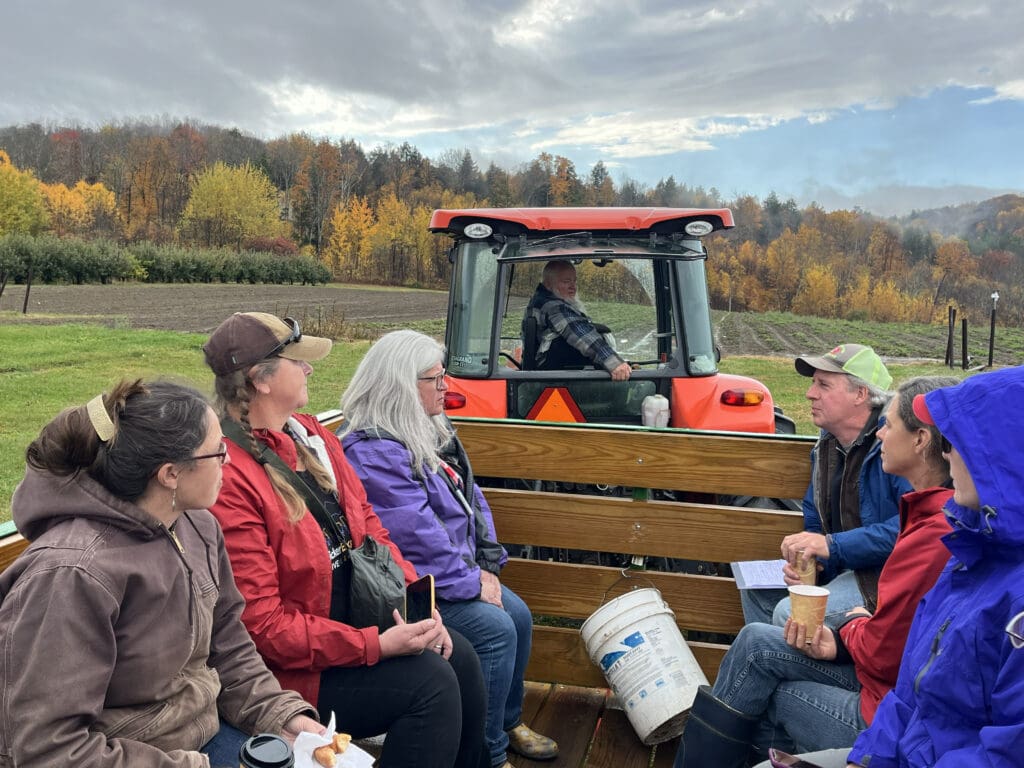
Today, the transition is still a work in progress. All four daughters are back in Vermont, and the family is beginning to define new roles and responsibilities.
“We wanted to get our ducks in a row,” recalled Linda. “But we didn’t realize how deep those ducks were. We learned a lot through the whole process.”
Roy, now 83, still manages the daily agricultural end of the orchard. As they developed a farm transfer plan, they recognized that there is not another generation in the family ready to become the orchardist to handle the day-to-day operations when Roy is no longer available to manage the crops. So they are currently looking beyond the family for someone with the knowledge and work ethic to help carry the farm forward. For the right person, there is potential for a new farmer to grow into an ownership position. So far, finding candidates with a strong interest in orcharding, and the capabilities to take on what has become a highly diversified fruit farm has proven challenging. But, the family is persisting in their search.
“A farm transition is not simply a transaction. It’s the transfer of thousands of small pieces of knowledge: when to prune, when to plant, when to lower a price because the peaches are ripening too quickly, when the soil is too wet, when a tree needs to come out, when an old tree that looks finished still has another season in it,” shared Roy.
A deeper transfer is already underway. It is happening every time Roy explains something he has learned over forty years. Every time Linda makes a decision without needing to ask. Every time one of the sisters takes responsibility for another piece of the operation. Every time a former teenage employee returns with a child and tells Roy, “I remember when…”
“I know that if something happened to Dad tomorrow, I would not know everything—but I would know enough to keep going. That knowledge may be one of the most important things Dad can leave behind,” shared Linda.
The orchard continues to grow and change, building on everything Roy has planted, nurtured, and learned over the past 45 years. And the family has started to write the next chapter. The knowledge, relationships, and commitment Roy has passed on will help shape what comes next. That is the work of succession planning—not simply deciding who takes over, but creating the foundation for the farm to thrive for generations to come.
“Bringing it forward was difficult. Dad didn’t like talking about it. It’s hard to talk about this stuff. I actually thought I would have retired, but this is better.”
linda