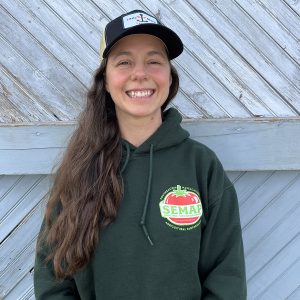
The 3rd annual Southeast New England Agriculture Conference and Trade Show (SNEACTS, pronounced “sneex”) was held on Sunday, February 8, 2026 at Bristol Aggie in Dighton. SNEACTS brought together farmers, fishers, local food producers, homesteaders, advocates, community members and folks from across the local food community for a day of insightful and engaging agriculture workshops and conversations strengthening farm viability, as well as agricultural programming for kids. Workshops ranged from hands-on production and training, business skills such as workforce development and risk mitigation to broader issues facing small farms, such as land tenure and soil health.
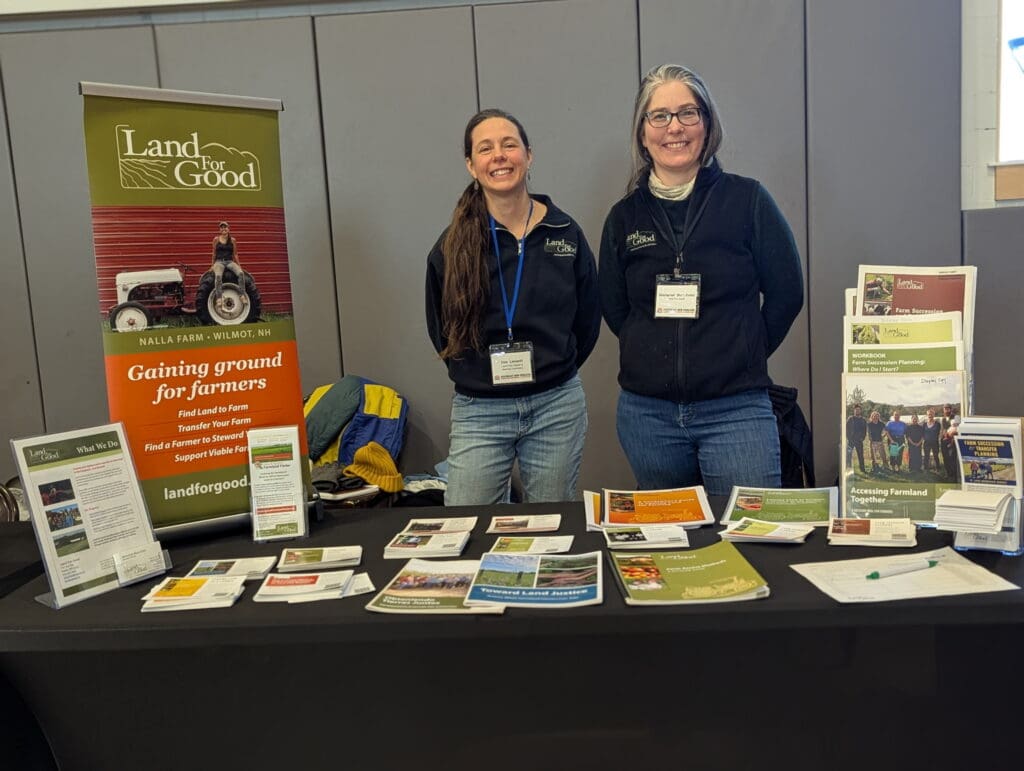
SNEACTS is a collective effort that brings together regional farmers and food producers for a day of community and learning around some of the most pressing issues facing farmers and our food system. SNEACTS is a collaboration with the Southeastern MA Agricultural Partnership, Bristol County Agricultural High School, Massachusetts Farm Bureau Federation, Northeast Organic Farming Association of Rhode Island, Plymouth County Extension 4-H, Buy Fresh Buy Local Cape Cod, The Pocasset Pokanoket Land Trust, Oasis on Ballou, Cluck & Trowel Farm, The Rhode Island Nursery & Landscape Association and Land For Good.
The collaborative effort that goes into planning SNEACTS really sets the stage for a welcoming environment that fosters connectivity. Folks are coming to learn from the workshops, connect with resources at the trade show, talk with farmer peers, and also to share. Convening with other farmers is often a highlight of the conference for attendees. We have opportunities to share space with farmers and service providers from outside of our close circles, across producer industries and farming environments. We learn about tools and methods that others are using, whether those are tools used in the field or in the office. We relate on problems that unite, for example, the relentless deer pressure. We connect with resources that fellow farmers or providers have recommended. As service providers, we meet new farmers, connect with other members of the farm operation or farm family, and link up with other providers.
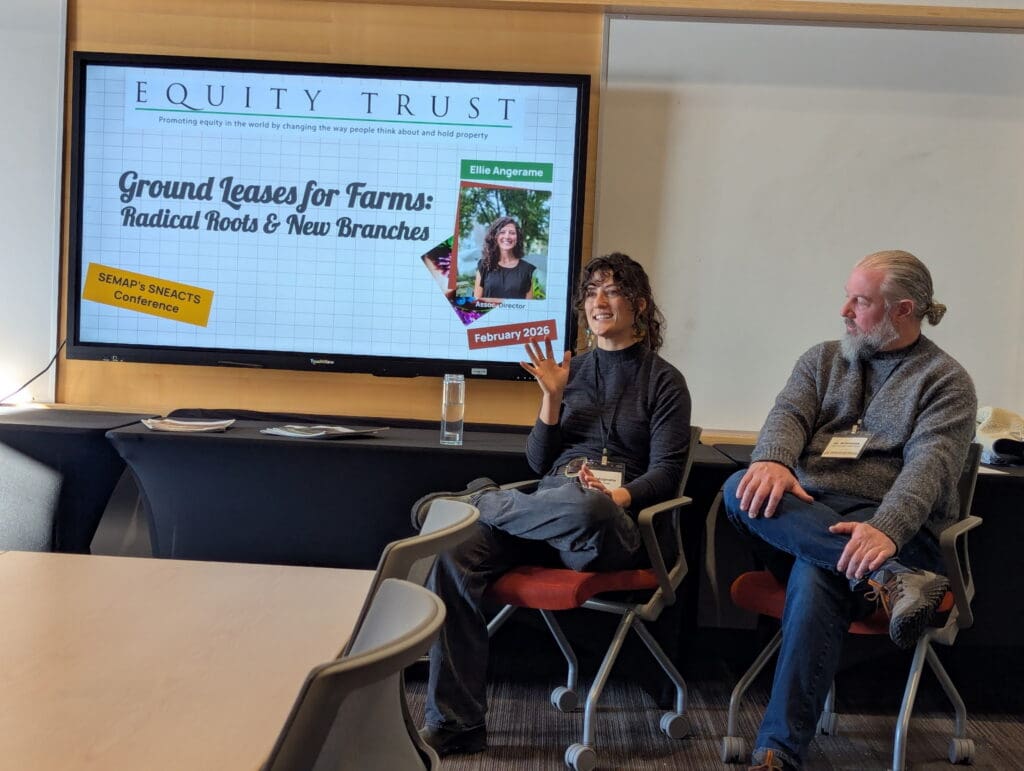
We also have the opportunity to engage all together in real time group conversation about tough issues during and after sessions. I find this to be true each year when we are talking about the ongoing challenges of farmland affordability, whether it’s in the context of access, long term tenure, ownership, or transfer. While we are presenting workshops, we often talk about tools that may be used to access land or to make land more affordable. This year Land For Good facilitated a panel discussion about alternative models of farmland purchase and ownership. Panelists included Farmland Commons, Equity Trust, and Kitchen Garden Farm. They each shared unique models for equity building and farmland ownership. I teamed up with Center for Mediation Rhode Island and Land & Sea Together to offer a lease clinic, reviewing the important components of the lease document, and communication and negotiation skills. Finally I offered a session for the younger generation farmers, like a group conversation on farm succession planning and resources. It was great to make space for farmers to share and hear from peers about their experiences.
During these sessions we are striving to provide examples of proven methods and models, and to impart confidence that these tools actually work. Yet we also must acknowledge the real limitations that we are trying to supersede. This is why we are here doing this work in the first place. We must all learn from each other about how we can work to persist within the current agricultural landscape, striving to build stronger farms and healthier families, and there is no better way to do this than together.
Each year I love to hear about what connections were made, who met whom, and then over the course of the upcoming season to see how those connections blossom into partnerships. If we’re lucky, it is that network which allows for connections to be made which provide a land opportunity for a new farmer, a meeting with a successor for a retiring farmer, or a link to a resource that helps someone stay on their land for the long run. It is that network which sustains us, that supports thriving communities and farm viability, and that allows us to do our work as Field Agents.
We must all learn from each other about how we can work to persist within the current agricultural landscape, striving to build stronger farms and healthier families, and there is no better way to do this than together.