
Resources
Case Study
Case Study: Ownership transfer to employees at Kitchen Garden Farm
Overview
This case documents a mid-career farm succession process in which ownership transferred from founding farmers, Tim Wilcox and Caroline Pam, to long-term employees through a structured sale of the business, land, buildings, and equipment. The transition was shaped by prior infrastructure investment and operational growth. When the founding farmers identified the need to transition out of the business, the internal management team demonstrated capable skills and interest in ownership.
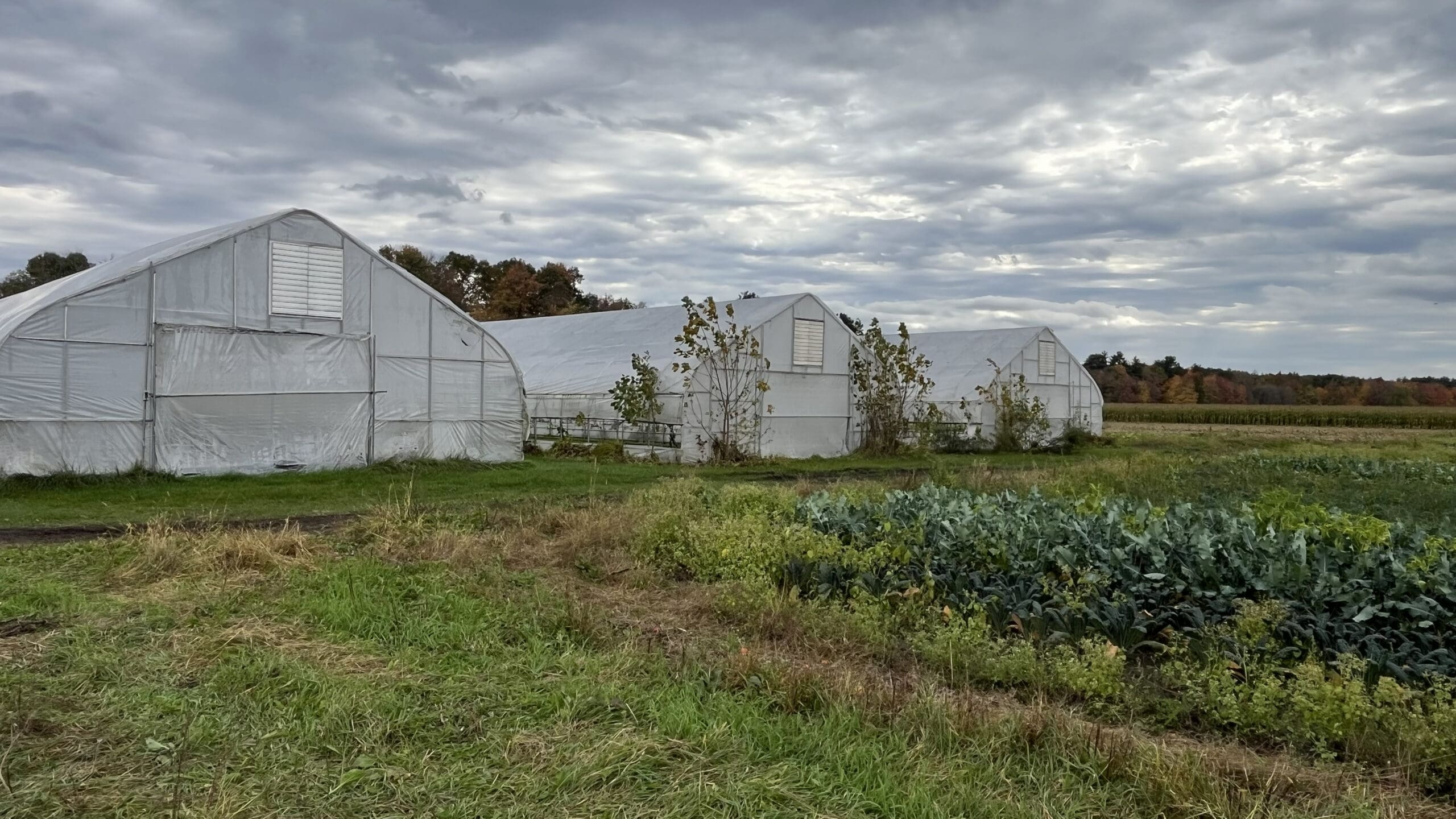
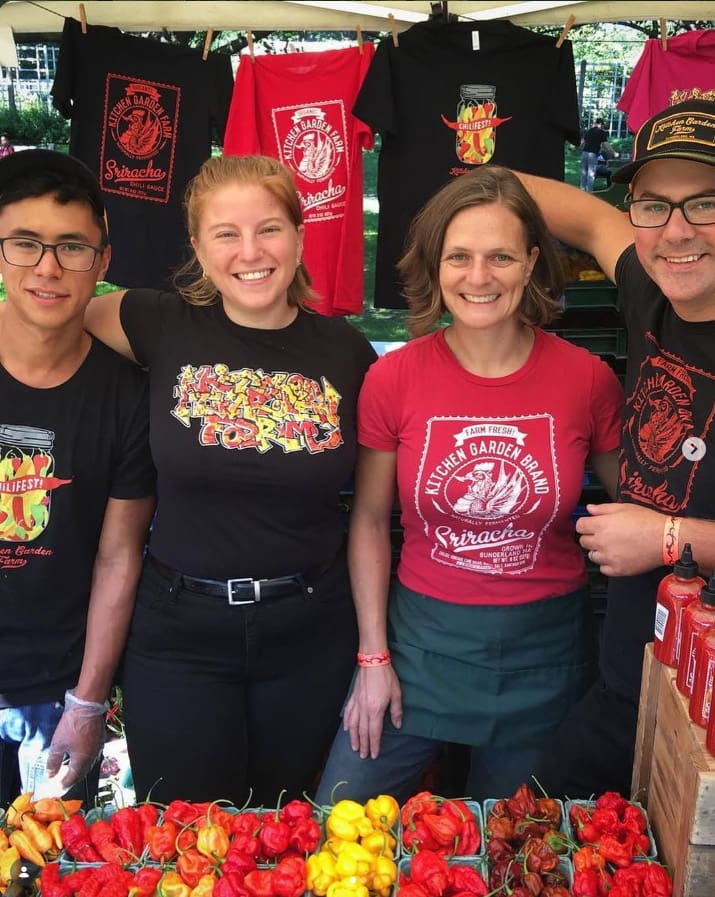
Kitchen Garden Farm is located in the prime agricultural region of Western Massachusetts. Caroline and Tim started the farm in 2006 on one acre of rented land. Over time, they expanded to approximately 65 acres, about half the land owned and half leased, with fields on both sides of the Connecticut River, in Sunderland and Whately. Of the land they own, most was protected with an Agricultural Preservation Restriction (APR) at the time of purchase, and what was not, they put under APR. After 18 years of Tim and Caroline building the business to a viable scale, they transferred it to longtime employees Max Traunstein and Lilly Israel.
Kitchen Garden Farm is a Certified Organic vegetable farm growing a full line of seasonal produce with a focus on specialty peppers and Italian vegetables sold throughout the Northeast. They are known for their value-added products, including salsas and sriracha, which are sold nationwide, as well as their role in the local agricultural community.
Building the Farm
Tim and Caroline purchased their home farm in 2007 and even as they were making early investments in infrastructure, starting with high tunnels in 2011, they were considering the farm’s future. In 2016 they used grant funding to construct a washroom facility (complete with a loading dock) and solar panels. In 2019, they built a commercial kitchen also with the support of grant funds. By this time, they were actively exploring succession, including financial analysis to understand the viability of such a transition given their growing assets and infrastructure.
“My husband and I just always at every stage, with every decision about every investment, thought about whether it was an investment that could capture that value or could transfer to some future buyer,” recalled Caroline. “[Considering] the implications of how each investment would not only impact our business plan in the current moment, or in the five-year term, but in the future.”
Caroline and Tim considered transitioning the farm to a worker cooperative. They decided against that due to the complexities of training and governance development. Ultimately, they preferred the style and flexibility of collaborating with current employees to transition from management to ownership.
The pandemic introduced rapid business expansion, including a food hub enterprise, followed by contraction, and a difficult production year. This, as well as family needs, accelerated their need to transition the farm to new ownership.
Identification of Successors
Max and Lilly, employed since 2014 and 2016, respectively, had progressively assumed senior management responsibilities across production, field operations, pack room, and sales. They had been trained, worked alongside the owners, and held the top leadership positions on the farm. Their deep institutional knowledge and leadership capacity made them natural candidates for succession. The owners trusted them to continue the legacy of the business.
Lilly and Max met in 2013 as students in the Stockbridge School of Agriculture at UMass, and ended up working together at Kitchen Garden Farm after graduation, working together for almost a decade before the transition.
“I recognized that they might be at a point in their careers where they might be looking for growth opportunities and we had sort of gotten them as far as they could go in this farm operation,” shared Caroline .
The transition process began in the fall of 2023 with initial conversations with Max and Lilly. Caroline and Tim encouraged them to only say yes to the opportunity if they felt they could commit to owning for at least 10 years. After committing, they made an announcement to the full staff. During that time, Caroline and Tim worked to figure out how to make the purchase financially feasible to two farmers who did not have cash to put down and to prepare Max and Lilly for ownership. This involved:
- Formal role documentation outlining outgoing owner responsibilities,
- Gradual reassignment of management duties over several months,
- Operational training in kitchen production systems and Preventative Controls Qualified Individual (PCQI) food safety certification,
- Redistribution of field and crew management responsibilities, and
- Expanded financial literacy through projection modeling and lender coordination.
Legal and Financial Tools
The transfer was accomplished in three phases to allow for necessary financing to be secured. Phase one in May 2024 was a transfer of the business, equipment, and buildings. Phase two was purchasing the land base in December 2025. Phase three involved a three-year, no interest loan for the inventory from the former owners.
Tim and Caroline treated the grant funding they had received for infrastructure development as invested operational capital rather than owner-extractable equity, giving them flexibility in structuring the deal. They were very involved and creative — they asked Max and Lilly to pay a financeable amount, 80% of the appraised value, and offered 20% as gift equity that served as a down payment, requiring no cash up front and allowing them collateral for their loans. Value was determined based on assets and inventory; there was no value placed on the business itself. The legal and financial structure involved:
- Maximizing use of low interest financing from Farm Service Agency (FSA): direct farm ownership loan at $600,000 and $400,000 for equipment. Loan approved without a down payment, an unusual approach.
- Matching financing from Farm Credit East lowered the interest rate with FSA and covered the majority of balance needed.
- Accessing grant funding from the Lotta Agricultural Fund and the Carrot Project.
- Launching GoFundMe campaign to cover closing and the season’s start up costs.
- Developing multi-year financial projections with external technical assistance.
- Setting final sale price at 80% of appraised value.
- Remaining 20% structured as gift equity (providing collateral for loans and eliminating down payment requirements for successors).
- Switching from a sole proprietorship to a single partnership LLC that owns both the land and business assets.
- Founders retained a 5-year vested interest in the value-added business.
“Our primary goal wasn’t to maximize the sale price based on the farm’s worth, but to determine a workable financial structure for the transfer,” shared Caroline.
Advisors and Partners
External advisors played a critical role in ensuring transparency and to provide support to both the exiting and incoming owners including:
- The Carrot Project provided support in exploring financing options.
- Farm Credit East assisted with financial projections.
- Lenders were engaged early to validate feasibility assumptions.
- Independent advisory support for successors ensured informed decision-making and reduced challenging dynamics for employees during the transition process.
Key Takeaways
This successful transfer of owners to long-term internal employees to continue farm operations and enterprises was made possible through creativity and careful planning, and not without challenges.
- Succession emerged from business evolution over time rather than a single planning moment.
- Development of strong management skills for employees was key for the outgoing owners to trust the incoming owners and for the new owners’ readiness.
- The sellers’ willingness to focus on financial feasibility for the buyers over market valuation was important for a successful transition. As was creativity in building a financing package.
- Successful succession pathways require intentional recruitment and cultivation of future farmer(s).
- Transparent internal communication to all staff was important following a preliminary agreement.
- Mentorship by farm founders created a structured off/on ramp.
- Tax advising throughout the business life can assist with tax planning and preparation for both current and future owners.
“Farming is an unusual career choice where people think of it more as an identity than a career,” reflected Caroline. “And I just think it’s really valuable to think of it… as a professional organization, providing jobs and careers for people who want to farm. Seriously, it’s normal to make changes in your career, and it’s normal for farms to have to transition. And I just think it’s important to talk about that and to sort of destigmatize that.”
Further Reading
- Kitchen Garden Farm
- Longtime employees buy Kitchen Garden Farm in Sunderland – Daily Hampshire Gazette
- Video recording, LFG webinar series
Program support is provided by the National Institute of Food and Agriculture, U.S. Department of Agriculture, through the Northeast Sustainable Agriculture Research and Education program under subaward number LNE23-471, “Viable Working Farmlands: Succession Planning Advising and Education for New England Farmers.”


