Dreaming of owning your own farmland, but not sure where to start?
Buying a farm isn’t like buying a home, it’s a unique journey with its own challenges including how to find a farm, property assessment, unique purchase options, and more.
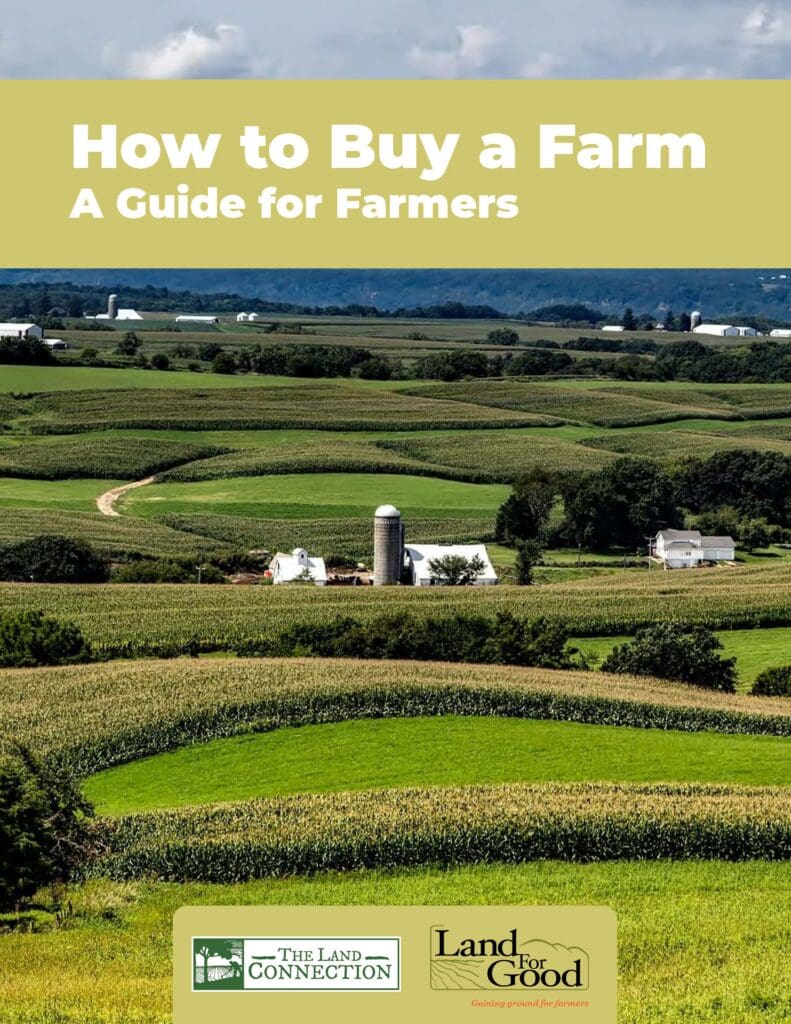
Amid the wide range of options, technical terms, and challenges, there’s a new resource for first-time farm buyers that provides a clear, comprehensive, and holistic roadmap to navigate the farm-buying process, How to Buy a Farm: A Guide for Farmers. The guide, developed by Land For Good and The Land Connection, gives farmers the tools to make informed decisions about a farm purchase.
“While there are alternatives to farmland ownership, many people who feel called to farming dream of the security and deep rootedness that come from owning land,” shared co-author and field agent Mike Ghia. “If that dream resonates with you, having the right information and expectations can help you avoid unnecessary stress and costly mistakes.”
How to Buy a Farm covers these many topics.
- Building Your Team: How to work with real estate agents, lenders, and advisors.
- Finding Hidden Gems: Beyond MLS listings—using farmlink programs, land trusts, and networking.
- Evaluating Property: What to look for during site visits, soil assessments, and infrastructure checks.
- Financing Options: Navigating USDA-FSA loans, Farm Credit, seller financing, and conventional mortgages.
- Unique Purchase Models: Working with For Sale By Owner, Lease-to-Own, and Auctions
- Closing the Deal: Drafting solid purchase offers, managing contingencies, and navigating closing day.
This guide is also for you if you’ve purchased real estate in the past but not a farm. You might already understand the legal, financial, and logistical aspects of real estate transactions, but you may well find valuable insights here that are specific to farmland.
We hope this guide proves to be a helpful resource as you navigate your journey toward farmland ownership. We also hope you have the support, perseverance, and good fortune you need to turn your vision into reality. Despite the challenges, many farmers successfully purchase farmland every year.
While this guide can’t make buying a farm easy, we do hope that it will reduce the anxiety that can naturally arise from venturing into new territory and making big decisions with long-term implications.
Download the free How to Buy a Farm: A Guide for Farmers
Excerpts from the guide:
The Larger Context
We wrote this guide knowing that how land is held, by whom, and under what conditions has always been a subject of study and debate. Nor are issues around farmland access and transfer new. Farmland and its ownership evoke a deep emotional response as they represent a sense of independence, a source of livelihood, land as legacy, intergenerational wealth, and rootedness in a community.
Currently, issues around farmland ownership and access are receiving heightened attention. Farmers of all kinds are experiencing fear and uncertainty as they confront escalating farmland prices; fierce competition with larger, more established farm businesses; social fragmentation; generational disconnection;
and inadequate support for farm access and transition. In fact, today’s beginning farmers report that land access is their biggest challenge.For some farmers of color and people from other marginalized communities, buying a farm or home can be even more fraught. Discrimination and structural
inequities across generations have made accessing the necessary resources and support to tackle a farm purchase particularly challenging for some.We acknowledge the deep and systemic flaws in our current system of land access and ownership. It is a reality that it can be challenging for any farmer to buy and and meet their farming goals in the present day. Because we believe that a just and sustainable food and farming system is essential for our country’s future, these land access difficulties are immensely significant. Some farmers’ land tenure goals can be achieved through traditional or innovative methods that don’t involve ownership. In fact, about 40 percent of US farmers rent some or all of the land they farm.
Preview of the guide:
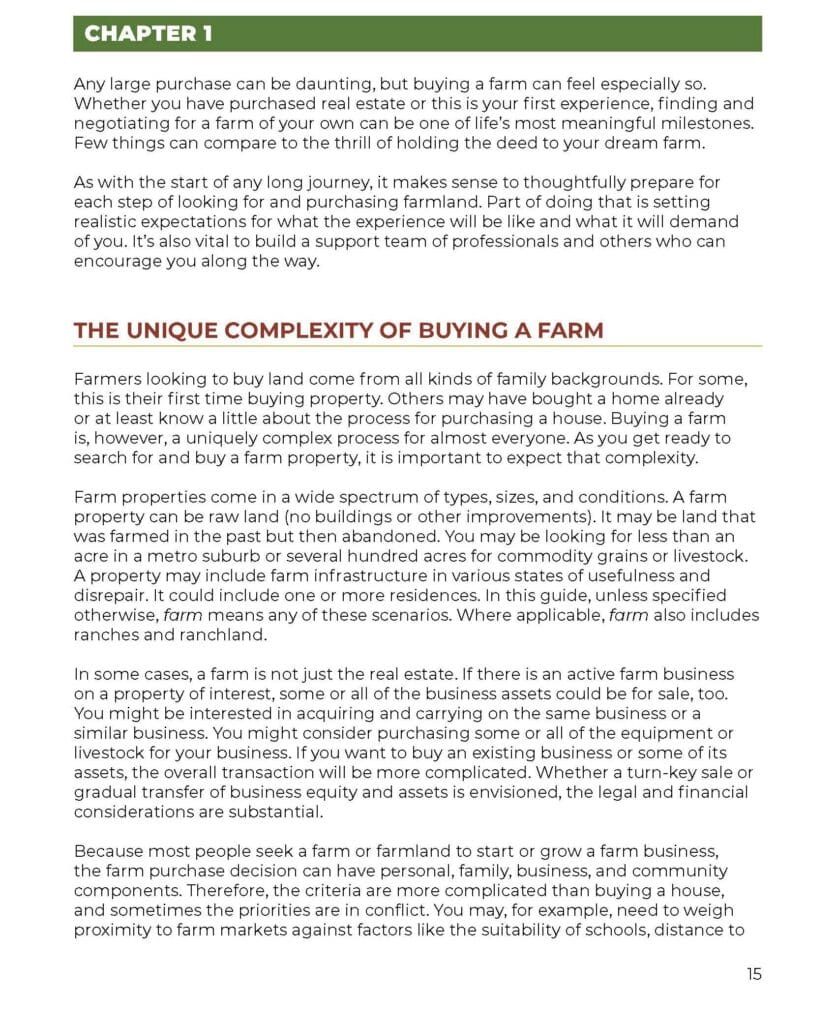
Have specific questions about the farm purchase process?
Our field staff can help you clarify goals, learn about different tenure methods, conduct a land search, assess farm properties, develop a sound lease or other agreement, and effectively communicate with sellers, landlords, attorneys, and others. Get in touch through our Farm Seeker Form.