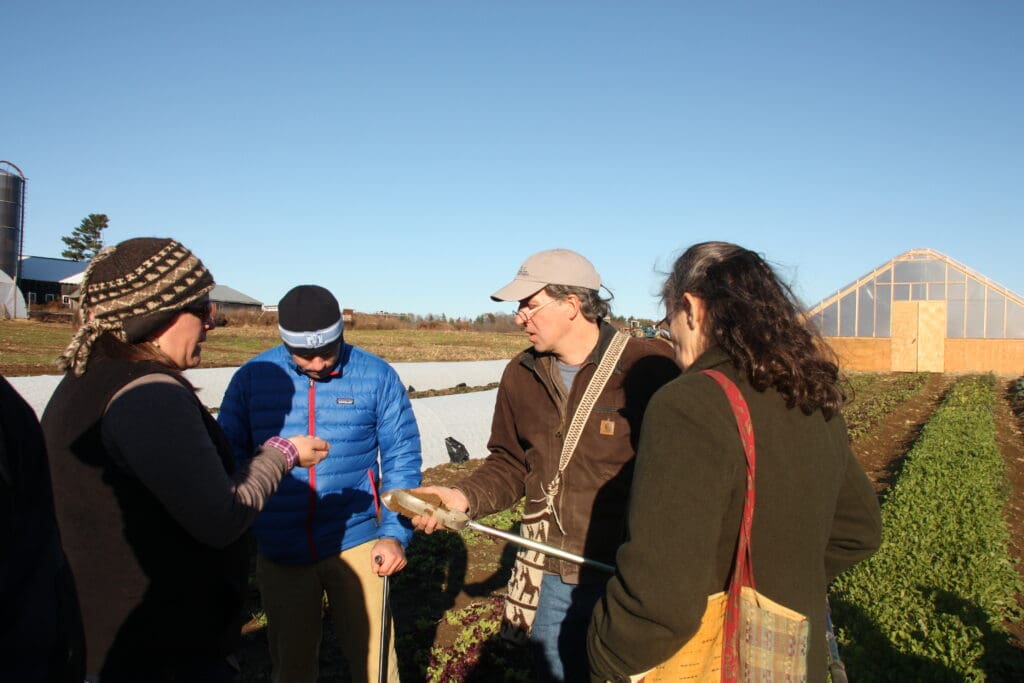
Land stewardship lease provisions outline expectations for the care of the land
Leasing land for farming can offer advantages for the farmer-tenant, the landowner, and the land. A good lease agreement considers both parties’ interests and includes stewardship or land-care goals and obligations. It provides an opportunity for the farmer and the landowner to care about the land together. It is also an expression of shared responsibility for the care and stewardship of the land and its resources. This can include expected stewardship or land-care practices.
Stewardship focuses on the responsible management of the land, including the long-term health and integrity of its natural and cultural resources. Land stewardship provisions are the parts of the lease that spell out how the land should be cared for over time. The goal is to make sure the farm stays healthy, productive, and environmentally sound.
New resource: Farm Leasehold Stewardship Guide
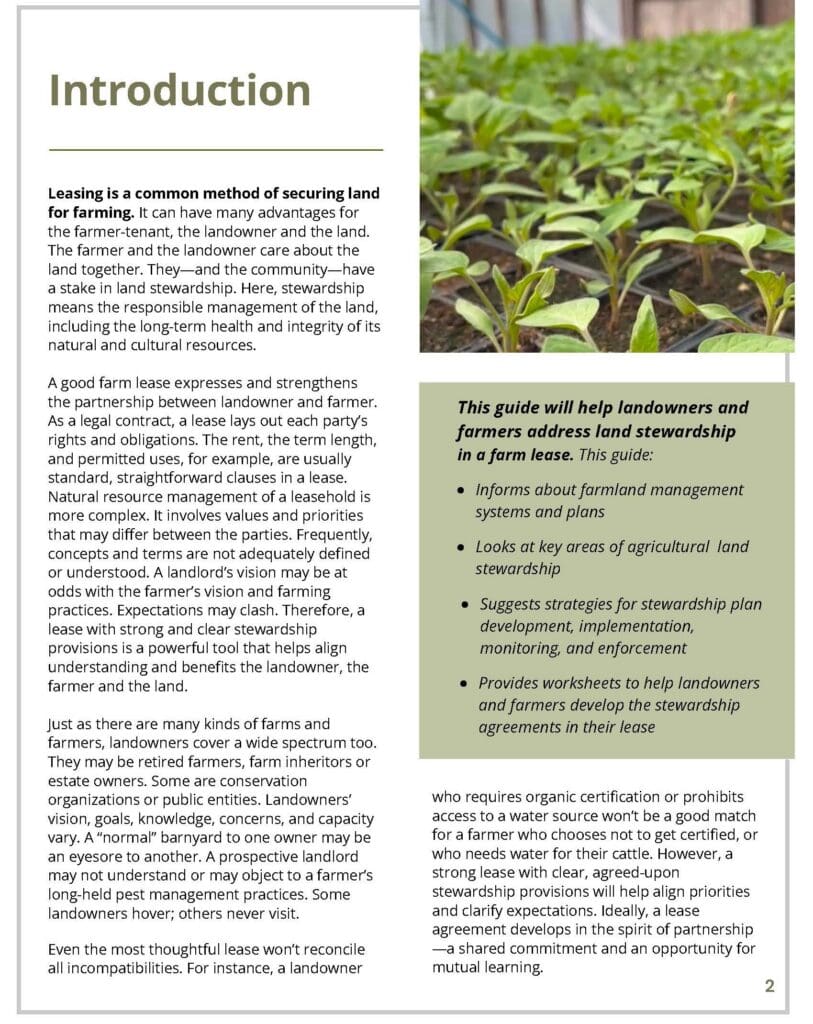
A new resource guides farmer-tenants and landowners on how to include stewardship concerns in a lease. The Farm Leasehold Stewardship Guide informs readers about farmland management systems and plans; looks at key areas of agricultural land stewardship; and suggests strategies for stewardship plan development, implementation, monitoring, and enforcement. The guide, developed by Land For Good and Viva Farms, provides practical worksheets to help landowners and farmers develop stewardship provisions in their lease.
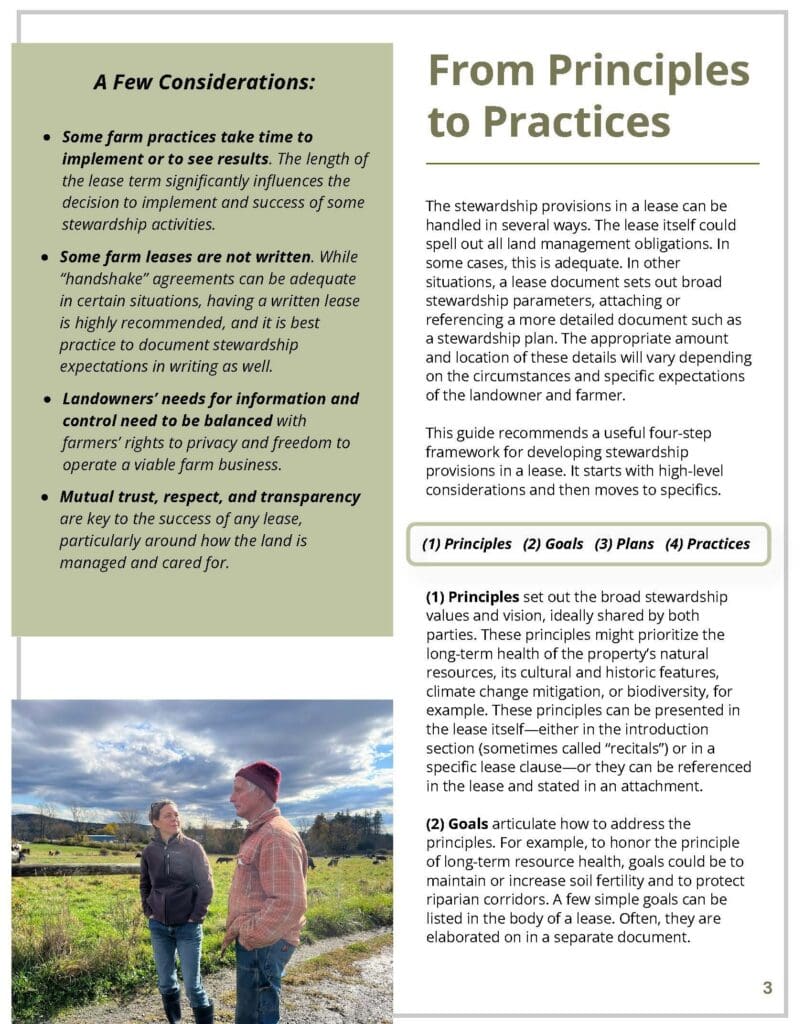
A good stewardship plan is specific enough to be concrete and understood by both parties, yet broad enough to give the farmer autonomy and flexibility to employ their preferred farming practices and land management strategies. For example, the parties may agree that soil health is a shared principle, and enhancing soil fertility is a goal, with lease language that allows a variety of methods to achieve that goal.
The appropriate amount and location of these details will vary depending on the circumstances and expectations of the landowner and farmer. The lease could spell out all land management obligations, or it could set out broad stewardship parameters, referencing a more detailed document such as a stewardship plan.
“The privilege of owning land comes with responsibilities, as does the right to use it. In a strong lease partnership, the parties equitably bear and share obligations. Each party has a role,” explains Kathy Ruhf, author of the guide and senior advisor at Land For Good. “The farmer’s role is to conscientiously pursue farming activities and abide by the plan and other agreements. The landowner’s role is to uphold their obligations outlined in the plan and agreements, and to respect the farmer’s autonomy, provided that they abide by the shared agreements.“
Download the free Farm Leasehold Stewardship Guide.
Preview of the guide:
If you’re thinking about leasing land to farm, leasing your land to a farmer, or putting a verbal agreement into writing, our field staff can guide you in creating sound and meaningful stewardship provisions in your farm lease.